Quick answer: No. Pools in the Phoenix area are not closed or winterized the way they are in cold climates. The pool stays full and the pump keeps running every day, with shorter run times and less chlorine than in summer. Water still has to be tested, balanced, brushed and filtered through winter, and the pump should run on the few nights that drop to freezing.
People who move to Chandler, Gilbert or Queen Creek from colder states often ask when to close the pool. Here is what winter care looks like in the East Valley.
Why Arizona Pools Stay Open
Winterizing exists to protect pipes and equipment from long hard freezes. The East Valley gets only a handful of nights near freezing each year, and they are short. Shutting a pool down here causes more trouble than it prevents: still water turns green, stains set in, and the spring cleanup costs more than a winter of light care.
Arizona Winter Pool Checklist
1. Shorten the pump schedule
Cold water needs less circulation. Many pools that run 8 to 12 hours in summer do well on roughly 4 to 6 hours in winter. Variable speed pumps can run longer at low speed. Running during the coldest early-morning hours adds freeze protection.
2. Lower the chlorine dose, keep testing
Algae grows slowly below about 60 degrees and the sun is weaker, so chlorine lasts longer. Test at least every week or two and keep free chlorine in range.
3. Watch pH and calcium
Cold water is more aggressive toward plaster and metal when it is out of balance. Keep pH at 7.4 to 7.6 and calcium hardness within range so the water does not etch the surface or corrode the heater.
4. Keep up with leaves and baskets
Fall and winter winds fill skimmers quickly. Leaves left on the floor stain plaster and feed algae in spring.
5. Brush weekly
Brushing prevents the dull film and early algae that build up when nobody is swimming.
6. Clean the filter
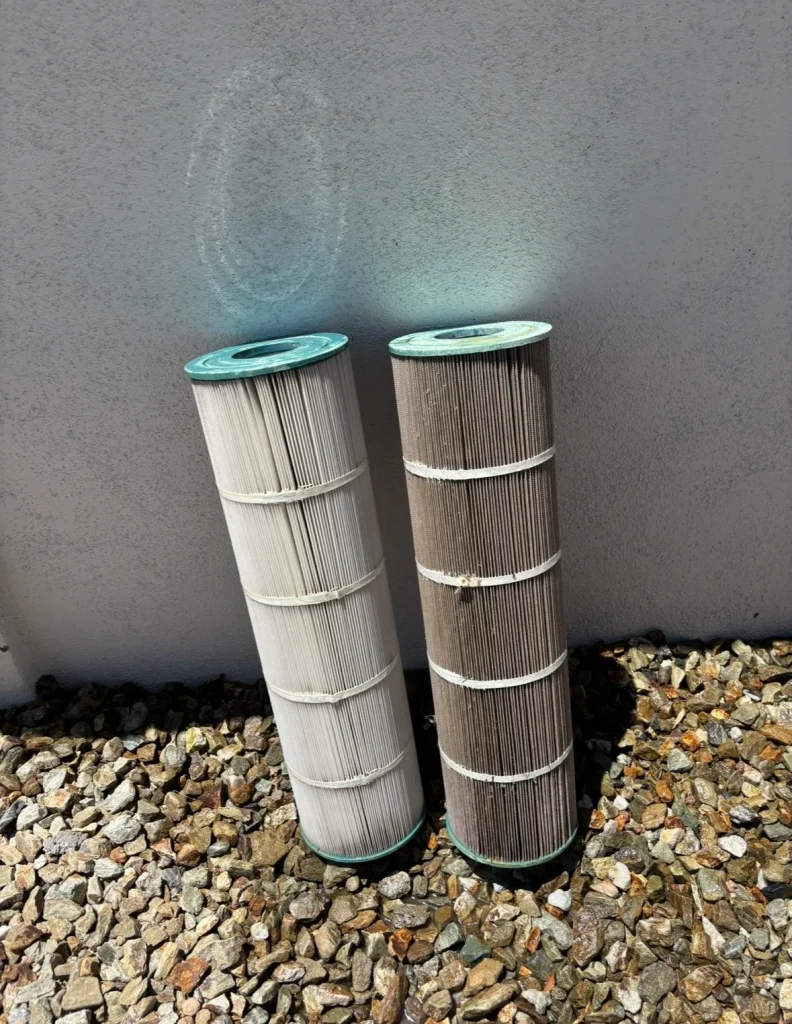
After monsoon season the filter is usually due. A clean filter at the start of winter keeps flow strong at shorter run times. See how often to clean a pool filter in Arizona.
7. Know your salt system
Most salt cells reduce or stop chlorine production in cold water. A low-salt or cold-water light in January is normal. Add a little liquid chlorine as needed until the water warms up.
Freeze Nights in the East Valley
- Run the pump through the night when temperatures are forecast near 32 degrees. Moving water resists freezing.
- If the system has freeze protection, confirm it is enabled and the air sensor works.
- Open valves so water moves through the heater, cleaner line and water features.
- If the power goes out during a freeze, open the drain plugs on the pump and filter.
The Best Season for Bigger Pool Jobs
Cool weather is the right time for work that is risky in summer heat:
- Draining and refilling to reset hard water
- Acid washing stained plaster
- Tile cleaning to remove the calcium line
- Equipment repairs and upgrades before the spring rush
- A pool inspection if you are buying or selling a home
Should You Cover the Pool?
A cover is optional in Arizona. It keeps leaves out, cuts evaporation and holds heat if the pool is heated. Solid covers need to be kept clean and are a safety hazard if they are not rated as safety covers.
Winter Pool Care FAQ
How long should I run my pool pump in winter in Arizona?
Roughly 4 to 6 hours a day works for many pools, adjusted for pool size, debris and pump type. Run it overnight during freeze warnings.
Can I stop weekly pool service in the winter?
It is not advised. The pool needs less chemical, but baskets, brushing, balance and equipment checks still matter, and problems caught late cost more.
Will my pool freeze in Phoenix?
The pool itself will not. Exposed pipes and equipment can be damaged on a rare hard freeze if water is not moving.
Why does my salt system say low salt in winter?
Cold water changes the reading and most cells cut production. Have the salt level tested before adding more.
Akaw Pools provides year-round pool service in Chandler, Gilbert, Queen Creek, Mesa and Tempe. Contact Akaw Pools to set up winter service.